Are We Loving the Gili Islands to Death? What Every Traveler Needs to Know Before They Book
There's a phrase that gets used a lot in travel circles: "leave no trace." It's a good principle, but it's also a bit of a fantasy when you're talking about a small Indonesian island that receives hundreds of thousands of visitors a year. The truth is, every traveler leaves a trace. The question isn't whether your visit has an impact — it does — but whether that impact trends toward harm or toward something more constructive.
I've been thinking about this a lot as I look at what's happening to the Gili Islands. These three small islands off the coast of Lombok have become one of Southeast Asia's most recognizable destinations, and the growth in tourism over the past decade has been extraordinary. That growth has brought real economic benefits to local communities. It's also brought real pressure to ecosystems that were already fragile before the Instagram age made the Giilis a bucket-list staple.
This isn't a piece designed to make you feel guilty about wanting to visit. It's an honest look at what's happening, what you can do about it, and why platforms like Gili Tickets believe that thoughtful travel planning is part of the solution.
What Overtourism Actually Looks Like on the Ground
When tourism advocates talk about overtourism, it can sound abstract. On the Gili Islands, it's pretty concrete.
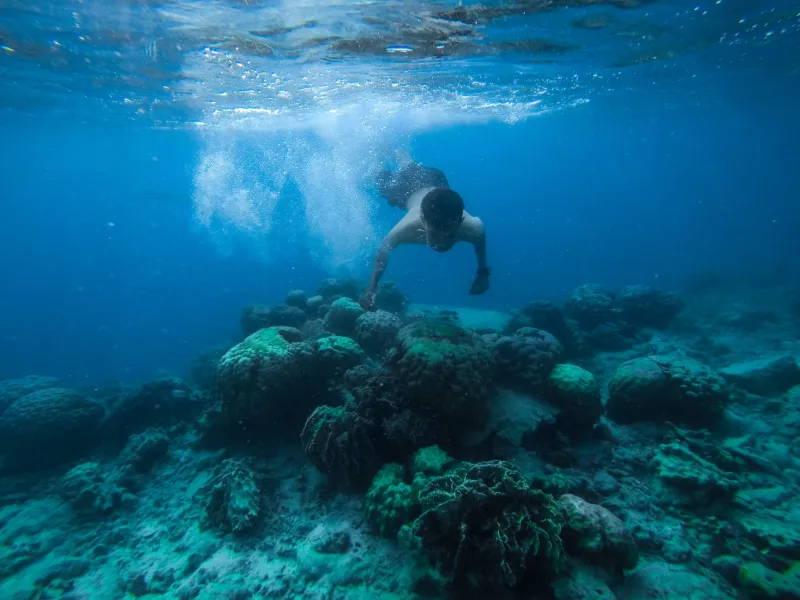
The coral reefs surrounding all three islands have experienced measurable bleaching and degradation over the past decade, driven by a combination of climate change and direct human impact — anchor damage from boats, physical contact from inexperienced snorkelers and divers, and runoff from the rapidly expanding built environment on the islands. Some of the shallow reef systems that were vibrant and teeming with life fifteen years ago are noticeably diminished today.
On the cultural side, rapid tourism development has put pressure on local Sasak communities, whose traditional way of life and economic structures have been significantly disrupted by the influx of outside investment and tourist demand. The balance between economic opportunity and cultural preservation is a genuinely difficult one, and it's a conversation that local communities are actively navigating.
None of this means the Gili Islands are ruined or that you shouldn't go. It means that how you go matters.
The Reef Situation: What You Can Actually Do
Let's talk specifically about the coral reefs, because this is where individual traveler behavior has the most direct impact.
Use reef-safe sunscreen. This is non-negotiable. Standard sunscreens contain oxybenzone and octinoxate — chemicals that are toxic to coral and contribute to bleaching. Reef-safe formulas using zinc oxide or titanium dioxide are widely available in the US at REI, Target, and most outdoor retailers. Pack it before you leave home; the selection on the islands is limited and often more expensive.
Don't touch the coral. Ever. Even a single touch from a snorkeler's fin can damage coral that took decades to grow. If you're new to snorkeling or diving, practice your buoyancy before you're anywhere near a reef. Many dive operators on the Gili Islands offer pool sessions or shallow-water orientation specifically for this reason.
Choose operators who take this seriously. This is where your booking decisions have real leverage. When browsing snorkeling and diving tours on Gili Tickets, look for operators who explicitly mention environmental practices — briefings about reef etiquette, limits on group size, and participation in reef restoration programs. These aren't just marketing bullet points; they reflect a genuine operational philosophy.
Consider a reef restoration dive. Several operators in the Gili Islands run coral planting and reef restoration programs that travelers can participate in. These experiences are genuinely meaningful, and the money goes directly toward conservation work. They're also, frankly, a more memorable experience than a standard snorkel trip.
Supporting Local Communities Through How You Spend
Where your money goes on the Gili Islands matters enormously. Tourism revenue that flows to large foreign-owned resorts and international hotel chains has a fundamentally different community impact than spending at locally owned warungs, hiring local guides, and buying from Sasak artisans.
This doesn't require radical sacrifice. It mostly just requires a bit of intentionality:
- Eat at locally owned warungs rather than exclusively at beach clubs owned by outside investors
- Hire local guides for island tours, inland hikes, and Lombok day trips — this is both economically meaningful and experientially richer
- Buy souvenirs from local markets rather than resort gift shops stocked with mass-produced goods
- Choose locally owned guesthouses when possible, particularly those that employ local staff and source food locally
When booking through Gili Tickets, we actively try to feature and promote operators who are locally rooted. It's a priority for us, not just a talking point.
The Plastic Problem and What Travelers Can Do
Single-use plastic is a serious environmental challenge throughout Indonesia, and the Gili Islands are no exception. The islands' waste management infrastructure is limited, and a significant amount of plastic ends up in the ocean — both locally generated and washed in from surrounding waters.
As a traveler, your contribution is small but not zero:
- Carry a reusable water bottle and use refill stations, which are increasingly common on Gili T
- Decline single-use plastic bags when shopping
- Participate in a beach cleanup if one is happening during your visit — several local organizations run these regularly and welcome tourist participation
- Choose restaurants and accommodations that have made visible commitments to reducing single-use plastic
How Booking Platforms Fit Into This
I want to be transparent here: Gili Tickets is a booking platform, and we have a commercial interest in travelers booking tours and experiences. But we also genuinely believe that a booking platform can be a force for more responsible tourism if it's used with intention.
Specifically, that means:
- Curating operators who meet basic environmental and ethical standards, not just whoever pays the highest commission
- Providing clear information about what responsible participation in an activity looks like
- Highlighting conservation-focused experiences alongside standard tourist fare
- Encouraging off-peak travel where possible, which reduces pressure on ecosystems and communities during high-density periods
We're not perfect at any of this, and the travel industry broadly has a long way to go on sustainability. But we think the direction matters, and we're trying to point in the right one.
A Different Way to Think About Your Visit
Here's a reframe that I find genuinely useful: instead of asking "how do I minimize my impact on the Gili Islands," ask "how do I maximize my positive contribution?"
Those two questions lead to different behaviors. Minimizing impact can mean going less, spending less, doing less. Maximizing positive contribution means engaging thoughtfully — supporting local businesses, choosing operators who invest in conservation, participating in restoration activities, and being the kind of tourist who leaves a place marginally better than they found it.
The Gili Islands are worth visiting. The marine life, the culture, the landscapes — they're genuinely special, and the people who live there deserve the economic benefits that tourism brings. The goal isn't to stay home. The goal is to show up in a way that the islands can sustain.
Start planning that kind of trip at Gili Tickets — and if you have questions about which operators are doing the right things environmentally, reach out. We're happy to point you in the right direction.