Mask On, Fins Down: Every Snorkeling Spot in the Gili Islands Ranked by Skill Level
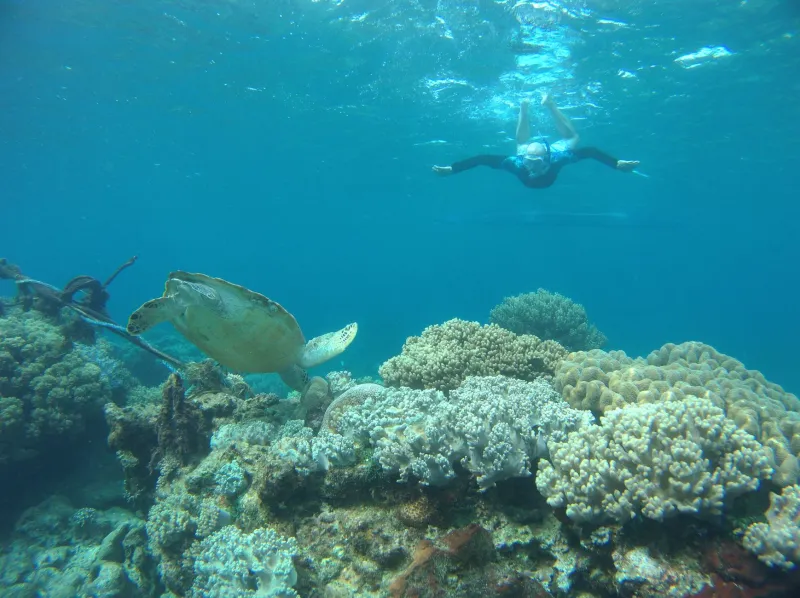
Somewhere between the hull of a wooden boat and the seafloor, the Gili Islands reveal their best secret. Above the waterline, these three small islands are undeniably beautiful — white sand, swaying palms, the works. But drop beneath the surface and you're in a different world entirely: sea turtles gliding past coral formations, reef sharks resting on sandy patches, and fish in colors that feel almost too bright to be real.
The good news for American travelers: you don't need to be a certified diver to access most of what makes the Gilas special. Snorkeling here is genuinely world-class, and with the right planning, every skill level from total beginner to seasoned underwater explorer can find something extraordinary. This guide ranks the major spots by difficulty and tells you exactly what to expect at each one.
Before You Get in the Water: What You Need to Know
A few basics that apply across all three islands:
Rent quality gear or bring your own. Rental masks and snorkels are widely available on all three Gilas, but quality varies. If you're prone to leaky masks or fogged lenses, bringing your own is worth the luggage space. Fins make a significant difference in current conditions — don't skip them.
Reef safe sunscreen only. This isn't a suggestion. Standard chemical sunscreens are actively damaging to coral ecosystems. Mineral-based sunscreen (zinc oxide or titanium dioxide) is what you want. You'll see signs reminding you of this across all three islands.
Currents are real. The channels between the Gili Islands can move fast, especially during tidal shifts. This is manageable with awareness and experience, but it's the main reason skill level matters when choosing where to snorkel.
Turtle sightings are common, not guaranteed. The Gilas are famous for sea turtle encounters, and they're genuinely frequent. But they're wild animals. Don't chase them, don't touch them, and don't assume every snorkel session delivers a close-up.
Beginner Level: Calm Water, Easy Entry, Big Rewards
Gili Air South Shore — Shore Snorkel
Best for: First-timers, families, anyone nervous about the water
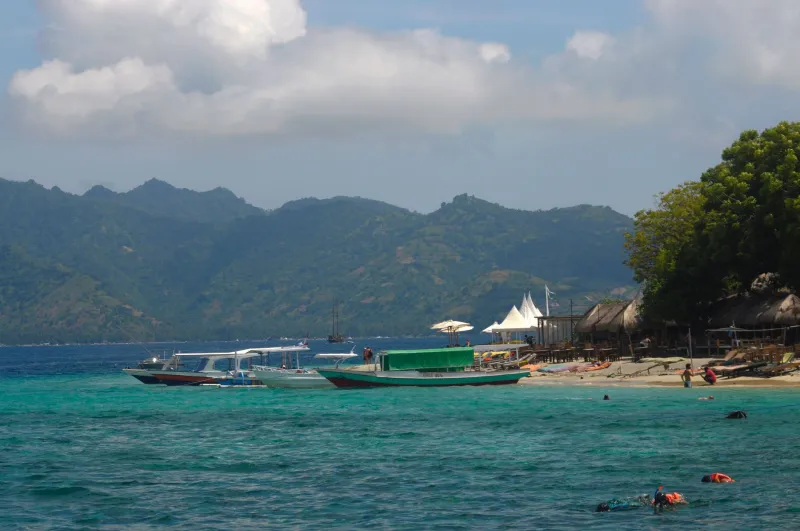
The southern coast of Gili Air offers one of the gentlest introductions to reef snorkeling in the entire archipelago. The water is shallow close to shore, the entry is easy from the beach, and the current is minimal. You'll find healthy coral patches starting just 20 to 30 feet from the waterline, with clownfish, parrotfish, and the occasional moray eel visible without having to go far.
This is the spot to get comfortable with your gear before attempting anything more ambitious. The reef isn't as dramatic as some of the deeper sites, but the accessibility makes it ideal for kids, nervous first-timers, or travelers who just want to float and look around without any stress.
Gili Trawangan Turtle Point (North Shore) — Guided Snorkel Tour
Best for: Beginners who want a guaranteed turtle encounter
North Trawangan is famous for its resident sea turtle population, and guided snorkel tours here are specifically designed for people with little to no experience. Guides manage the group, handle navigation, and know exactly where to find turtles resting on sandy patches or grazing on sea grass.
The water here is slightly deeper than the Air south shore — expect 10 to 20 feet — but the guided format makes this accessible even for travelers who've never snorkeled before. Tours typically depart from the main beach and run 60 to 90 minutes. Book through a reputable operator and confirm group size; smaller groups mean better experiences.
Intermediate Level: More Depth, More Marine Life, Some Current
Gili Meno Wall — Boat Snorkel
Best for: Comfortable swimmers who want to see reef sharks and larger fish
Gili Meno's western wall is where the Gilas start to get genuinely impressive. The reef here drops from about 10 feet down to 60 or more, and while you're staying near the surface as a snorkeler, the visibility is often good enough to see deep into the blue below you. White-tip reef sharks rest on the sandy bottom, hawksbill turtles cruise the wall, and schools of larger fish — jacks, snappers, barracuda — are common sightings.
This site requires a short boat ride from shore and is best visited with a tour operator who can position the boat correctly and brief you on the current conditions. The current here can pick up, particularly during tidal changes, which is why intermediate comfort in the water is recommended.
Biorock Gili Trawangan — Structured Reef Snorkel
Best for: Travelers interested in reef restoration and unique underwater structures
The Biorock project off Trawangan is one of the most interesting snorkel sites in the region — an artificial reef structure built using low-voltage electrical current to accelerate coral growth. It's become a thriving reef habitat and an educational experience as much as a snorkel spot.
The structure sits in moderate depth, and the coral coverage is dense and varied. It's also a popular site, so expect company. Morning visits tend to be less crowded. This one works well for intermediate snorkelers who are comfortable in open water but aren't looking to deal with strong drift.
Advanced Level: Drift Snorkeling, Strong Currents, Serious Encounters
The Channel Between Gili Air and Gili Meno — Drift Snorkel
Best for: Strong swimmers comfortable in moving water
The channel separating Gili Air and Gili Meno is one of the most exhilarating snorkel experiences in all of Indonesia — and one of the least forgiving for anyone who overestimates their ability. The current here moves fast during tidal flow, and the idea is to use that current to drift along the reef rather than fight against it.
When conditions are right, the marine life in this channel is exceptional: large turtles, reef sharks, rays, and dense fish populations drawn to the nutrient-rich moving water. You need a boat to drop you up-current and collect you at the other end. Do not attempt this without a guide and a boat standing by. But for experienced snorkelers, it's genuinely unforgettable.
Shark Point, Gili Trawangan — Advanced Open Water Snorkel
Best for: Confident, experienced snorkelers only
The name is accurate. Shark Point, off the southeast corner of Trawangan, is where black-tip and white-tip reef sharks congregate in numbers. They're not aggressive toward snorkelers — these species generally ignore humans — but the site requires comfort with open water, some current, and the psychological reality of being in the water with multiple sharks.
Visibility here is typically excellent, and the reef is in good health. Experienced snorkelers who take this one seriously will come away with stories worth telling. First-timers should not attempt it.
Quick Reference: Snorkel Spots at a Glance
| Site | Island | Level | Highlights |
|---|---|---|---|
| South Shore | Gili Air | Beginner | Easy entry, clownfish, moray eels |
| Turtle Point | Gili Trawangan | Beginner | Guided tours, sea turtles |
| Meno Wall | Gili Meno | Intermediate | Reef sharks, wall diving views |
| Biorock | Gili Trawangan | Intermediate | Artificial reef, coral restoration |
| Air-Meno Channel | Between islands | Advanced | Drift snorkel, diverse megafauna |
| Shark Point | Gili Trawangan | Advanced | Reef sharks, open water |
Wherever your skill level lands, the Gili Islands have something waiting for you under the surface. Start where you're comfortable, build from there, and don't rush the process — the reef isn't going anywhere.